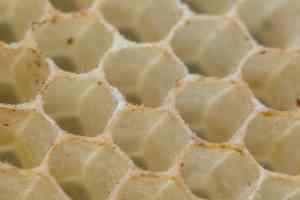
At L’abeille qui emballe, every detail counts in the creation of our reusable, eco-friendly and sustainable food packaging. Organic jojoba oil plays a crucial role in the composition of our beeswax wraps, alongside French beeswax and organic pine resin from the Landes region. Discover why organic jojoba oil is one of the best choices for reusable food packaging, with its unique properties and advantages over other oils, such as sunflower, olive, hemp or coconut oil.

The origin and quality of organic jojoba oil
Where does jojoba oil come from?
Jojoba oil is extracted from the seeds of the Simmondsia Chinensis shrub, native to the arid regions of North America, Mexico and the southern United States. These seeds resemble olives, and when cold-pressed, they yield an oil that is also widely used in cosmetics.
At L’abeille qui emballe, we favour organically grown jojoba oil. This means that it is cultivated without pesticides, chemical fertilisers or other additives that could harm the environment and affect the purity of our products. Choosing organic also guarantees that the crop is grown in a way that respects biodiversity and natural cycles, protecting the land from overexploitation. By choosing organic ingredients, we also reduce our environmental impact while offering a safer product.
Is organic jojoba oil environmentally friendly to the soil where it is produced?
Jojoba oil cultivation is soil-friendly, particularly on certified organic farms. Here’s why:
- Adaptability of jojoba: Jojoba grows naturally in arid regions, such as the deserts of North America, without requiring intensive irrigation. This characteristic makes it a crop with low impact on water resources, reducing soil erosion and preserving soil health. Jojoba is used in the reforestation of semi-desert areas 1
- Organic farming and biodiversity: On organic plantations, jojoba is cultivated without pesticides or chemical fertilisers. This preserves essential microorganisms and nutrients in the soil, creating a healthier and more diverse environment for local flora and fauna.
- Soil preservation: Jojoba shrubs are perennial plants, which means they do not need to be replanted every year. This characteristic prevents repetitive tilling of the soil, thereby reducing the risk of erosion and nutrient loss.
The choice of L’abeille qui emballe

By choosing organic jojoba oil for your beeswax wraps, you are supporting a culture that preserves not only the quality of the product but also the sustainability of agricultural ecosystems. It is a choice consistent with an ecological and environmentally friendly approach. Although the organic jojoba oil I use is not local and comes from Peru, I buy it from a French wholesaler in large containers that last me about a year. And I reuse the containers for other purposes through upcycling.
Why is organic jojoba oil essential in our bee wraps?
To make good beeswax wrapping, you need to add oil to the beeswax to make the wrapping more malleable when cold and give it a smooth texture.
What makes jojoba oil special? Unlike other oils, it is actually a liquid wax. This makes it a naturally oxidation-resistant ingredient, ideal for zero-waste food packaging.
Organic jojoba oil adds an essential touch to our bee wraps. Not only does it soften the wax, but it also helps to extend the life of reusable food wraps. Thanks to its stability, jojoba oil remains resistant to oxidation and helps to maintain a smooth, non-stick texture, ideal for wrapping food without absorbing odours. It can be stored for 10 years without deterioration…
Comparison with sunflower, olive, hemp or coconut oil: why choose jojoba oil?
Organic jojoba oil is particularly suitable for making reusable beeswax food wraps due to its stability, texture, and antifungal and preservative properties. This is why it stands out from more commonly used vegetable oils such as sunflower oil, olive oil, hemp oil, and coconut oil.
Sunflower oil
Sunflower oil is often appreciated for its lightness and affordability, but it has limitations when it comes to making beeswax wraps. Firstly, it is more prone to oxidation than jojoba oil, which means it can go rancid over time, affecting the quality and durability of the wraps. Sunflower oil also does not provide the same temperature resistance, which can reduce the effectiveness and flexibility of reusable wraps. Jojoba oil, on the other hand, remains stable and resistant, ensuring durable and high-performance wraps over the long term.
Olive oil
Olive oil is another vegetable oil commonly used in cosmetics and cooking for its moisturising properties. However, it is thick and viscous, which is not ideal for bee wraps intended to wrap food. It also tends to oxidise relatively quickly, especially when exposed to air, which could affect the quality of the wraps. Jojoba oil, which is actually a liquid wax, is more resistant to oxidation and retains its supple texture without making the wraps greasy or sticky.
Hemp oil
Hemp oil is an interesting alternative, but it has some important differences compared to jojoba oil for bee wraps:
- Stability and rancidity: Hemp oil tends to go rancid more quickly than jojoba oil because it contains polyunsaturated fatty acids that oxidise easily. This can shorten the lifespan of bee wraps and require more frequent replacement.
- Texture: Hemp oil is quite light and penetrates well into the fabric of bee wraps, but it can give a slightly oilier finish than jojoba oil, which can make the wraps a little stickier to the touch.
- Antibacterial properties: Hemp oil has anti-inflammatory properties and is rich in fatty acids, but it is not as antibacterial as jojoba oil. This means that beeswax wraps may need to be cleaned more frequently.
- Smell: Hemp oil has a stronger smell, which can transfer slightly to bee wraps and food. Jojoba oil, on the other hand, is almost odourless.
Therefore, although hemp oil can be used for beeswax wraps, it is generally less durable than jojoba oil, which remains more stable and better suited for prolonged use.
Coconut oil
Coconut oil is valued for its aroma and moisturising properties, but it has limitations when used in food packaging. Due to its sensitivity to temperature changes, coconut oil solidifies in the cold and becomes liquid at room temperature, which compromises the consistency of beeswax wraps. In addition, it can leave a slight scent on food, which jojoba oil does not. Liquid jojoba wax maintains its texture and stability even in moderate temperature variations, and it is odourless, making it ideal for food use.
The Gold of the Incas: why jojoba oil is the best choice…
Organic jojoba oil surpasses these other oils in terms of stability, neutrality and resistance to oxidation. This makes it an optimal choice for sustainable and eco-friendly reusable beeswax wraps. Its unique qualities contribute to wraps that are flexible, durable and odourless, perfect for preserving your food.
It certainly deserves its nickname, “Gold of the Incas” the!
In summary
Using organic jojoba oil in our beeswax wraps is much more than a technical choice: it is an eco-responsible approach to sustainability. Every reusable wrap we offer at L’abeille qui emballe is designed to combine performance with respect for nature. Thanks to jojoba oil, our products retain their flexibility and durability, making our beeswax wraps a healthy and natural alternative to plastic film.