The star ingredient used by L’abeille qui emballe for its bee wraps is beeswax. But do you know its properties and are you aware that there are different types of wax?
- How is beeswax produced?
- What are the properties of beeswax?
- What uses do humans have for beeswax?
- What do beekeepers do with their wax?
- How do beekeepers harvest wax?
- Does beeswax contain chemical treatments?
- How to choose a quality wax?
- The wax of L'abeille qui emballe
- The approach of L'abeille qui emballe
How is beeswax produced?
Beeswax is the only product of the hive that is not collected and processed by bees. Bees collect pollen and plant resin to consume and process, while young worker bees secrete wax during their “wax-producing” phase (between March and April in our region). They have glands on their abdomens that enable them to produce wax, which is very valuable for the development and survival of the hive. Impressive, isn’t it?
This wax has various uses:
- It allows bees to create the combs in which they will store their brood, pollen and honey. Made up of 80% wax and 20% pollen and propolis, the hexagonal cells are sealed with a thin layer of wax called beeswax. It is the most beautiful part of the hive, as the beekeeper harvests it during the year, while reusing the combs from one year to the next.
- It is also used in the transformation of plant resin into propolis, the brown substance that bees use as a building material. Propolis also has antiseptic properties that help keep the hive healthy.
What are the properties of beeswax?
Beeswax has antibacterial properties. No wonder we use it to make beeswax wraps, reusable and eco-friendly food wraps that are a great alternative to cling film and aluminium foil! Thanks to this quality, food stays fresh longer and bacteria growth is prevented.
It is also water-repellent and airtight. Perfect for beeswax wraps: it protects food from external elements and keeps it fresh! It can even be used as a watertight lid for small containers such as yoghurt pots…
What uses do humans have for beeswax?
The first recorded use of beeswax by humans dates back to the Neolithic period, 9,000 years ago. Our ancestors were already aware of the virtues of this noble material for various uses. Today, beeswax is used in cosmetics, to polish wood, make candles and soaps, and create zero-waste packaging.
What do beekeepers do with their wax?
Beeswax is precious! Beekeepers melt down the cappings from harvested frames and generally reuse them to make embossed wax sheets for their hives. In fact, for bees to produce one kilogram of beeswax, they “consume” an average of eight kilograms of honey: this is energy-intensive, and beekeepers must implement strategies to optimise their harvests.
How do beekeepers harvest wax?
Beekeepers collect their wax caps during honey harvesting. They must “uncap” their frames in order to extract it. To do this, beekeepers can use a sharp knife or special tools (turbo harrow, pointed harrow, etc.), or an automatic machine designed to extract large quantities of honey. The beeswax is then stored in a large container and melted down to remove any residues (honey, propolis, twigs, etc.). There are various tools available for this purpose: solar or electric wax melters, bain-maries, wax boilers, ovens, etc. The melting point of beeswax is 63 degrees.
Does beeswax contain chemical treatments?
It is essential to know where beeswax comes from, as it is a fatty substance that can accumulate contaminants, pollutants and pesticides.
But where could the contaminants come from?
Firstly, the environment of the hives
Bees bring back pollen from flowers that they can collect from several kilometres away. Intensive farming nearby can be a significant source of pesticide contamination. Did you know that in the United States, beehives are moved to crop fields that have been heavily treated with pesticides in order to pollinate them, condemning the bees to certain death?
Then treatments applied to the hive.
All hives are treated to protect bees from varroa mites, which parasitise them and decimate their colonies.
- In organic beekeeping, only certain products are permitted, but they must be applied several times during the season to be effective.
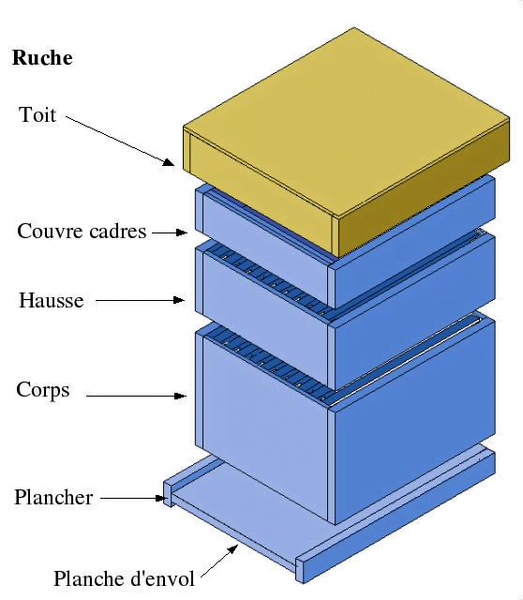
- In traditional beekeeping and with modular vertical hives, the bottom of the hive (the ‘hive body’ where the bees live) is treated once at the start of the season, whereas the top of the hive (the ‘super’, where the bees store their honey) is not.
How to choose a quality wax?
- Never use wax known as “body wax”. This is because it has been in contact with treatments against varroa, a mite that harms bees.
- Choose wax from the honeycomb! It is the purest wax in the hive.
- Avoid purchasing foreign wax of uncertain origin. It may be cut with paraffin or contaminated with pollutants or pesticides. Much so-called organic wax comes from Kenya or Turkey and has travelled a long way.
- If you want to make beautiful beeswax wraps or refresh wraps that are looking a little tired, buy a DIY kit from L’abeille qui emballe. The wax mixture contains all the ingredients that make a good beeswax wrap: organic jojoba oil and organic Landes pine resin.
The wax of L’abeille qui emballe
At L’abeille qui emballe, we exclusively use French beeswax:
- I use wax from beekeeper Jean-Louis Lautard, president of the Provence and Southern Alps Honey Association (Sympa) and from local beekepers in Brittany. Committed to the quality of his certified honey, he moves his more than 1,000 hives to selected, unspoilt locations, far from potential pollution and close to selected flower species.
- Capping wax is the purest wax in the hive because it is a young product: bees produce it during the year and use it to seal honey-filled cells. It is never treated with pesticides.
The approach of L’abeille qui emballe
I had been reducing my waste and thinking carefully about my consumption for some time. In 2017, I created L’abeille qui emballe (The Bee That Wraps) and campaigned for a world with “less plastic and more bees!”.
You can find the following items in the online shop:
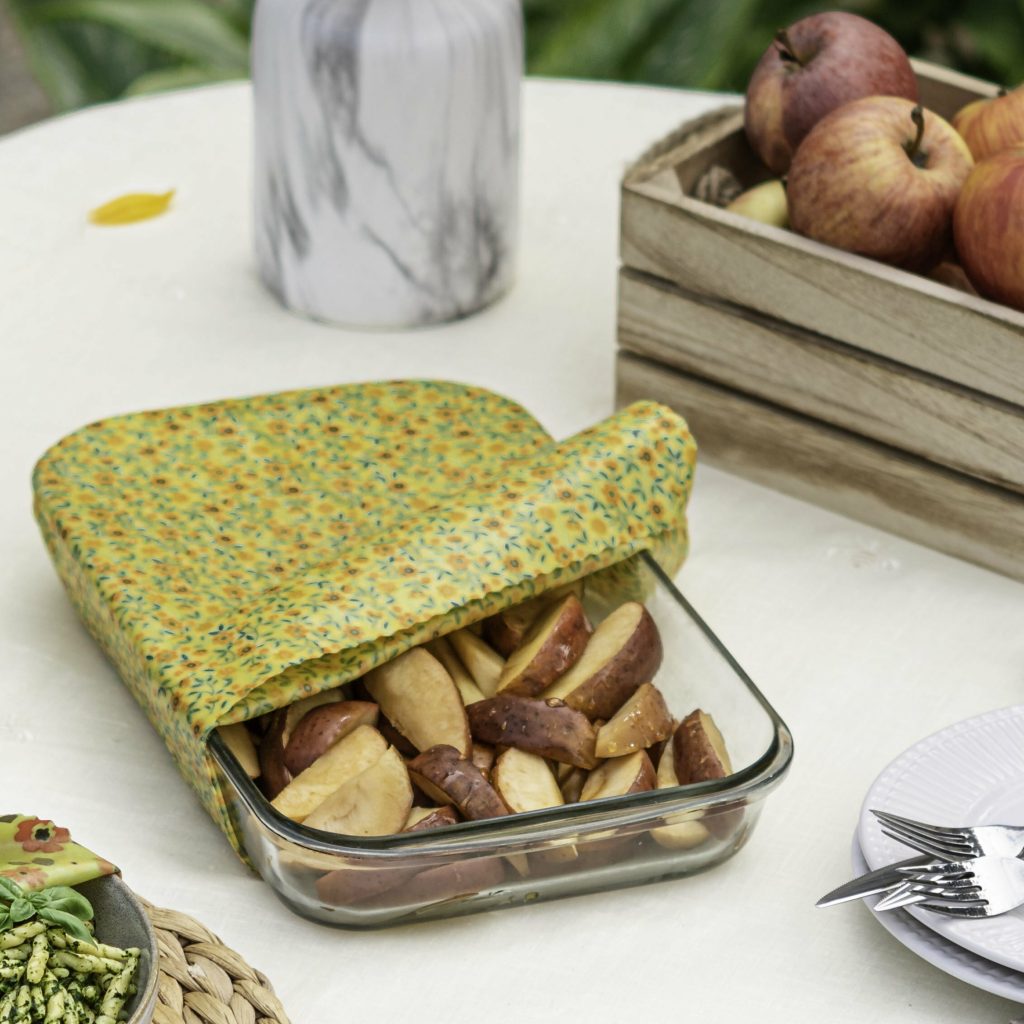
- my reusable beeswax food wraps (beeswraps),
- DIY kits to refresh them or create your own,
- and eco-friendly surf wax
They are all made in my workshop using the highest quality French wax!
Taking a keen interest in beekeeping was a logical next step in this process:
Every time I visit Jean-Louis’ honey farm in Le Tignet, I learn more about honey and beekeeping. I am welcomed by a team of enthusiasts who have passed on their passion for bees to me!
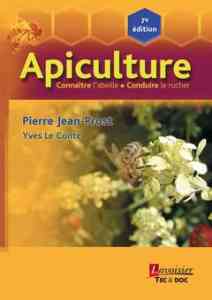
At the same time, I am reading the book “Apiculture” by Jean Prost & Yves Leconte, considered to be the bible of beekeeping.
And I visit my friends’ beehives whenever I get the chance!

