Where does the organic pine resin found in my beeswax wraps come from? And what are its qualities?
In June, I went surfing for ten days in Landes and the Basque Country to visit my brother who lives there. I took the opportunity to meet my supplier of organic pine resin. We spent the afternoon learning about the art of resin tapping, a traditional skill that is dying out in France.

Why is pine resin (or rosin) used in beeswax wraps?
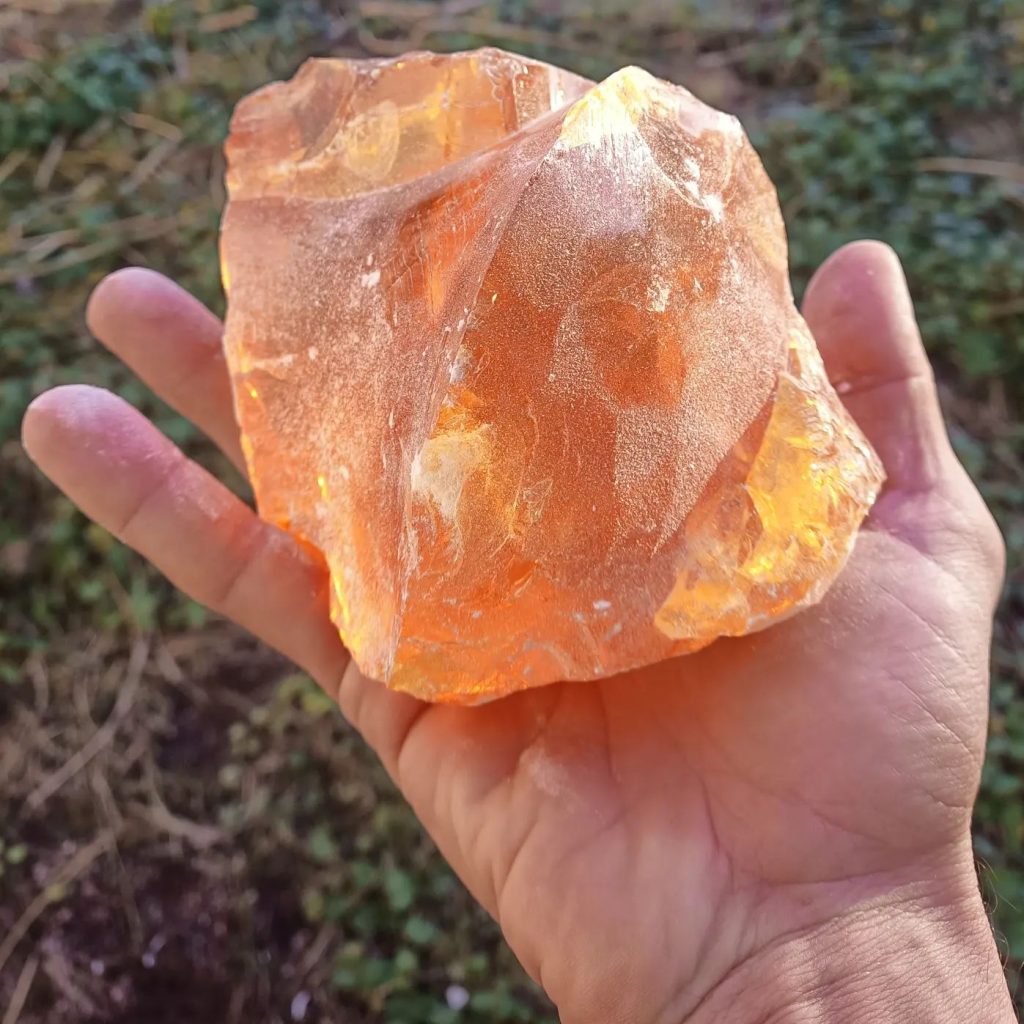
Rosin a solid substance obtained from resinous trees. It is an essential ingredient in the manufacture of L’abeille qui emballe beeswax wraps:
- Firstly, it has antibacterial and antifungal properties. This is good for protecting food from external aggressions.
- It is malleable and sticky, helping the beeswax adhere to food, and above all, it makes the beeswrap flexible, allowing it to be crumpled without damaging it!
- Finally, the one we use (organic rosin from the Landes region) does not contain the highly allergenic molecule Delta-3-Carene, which can be found in other types of rosin.
For the record, amber, also known as “Baltic yellow gold”, is fossilised resin!
What is resin tapping?
Gum tapping is the process used to obtain this substance as well as turpentine essential oil, the second derivative of pine resin.
Product quality and production ethics
When creating my beeswax packaging, I use French raw materials as much as possible and select ethical companies that share my values. I try to combine local consumption and Made in France with zero waste!
The rosin I use comes from the Landes region and is made from organic pine resin. It comes from maritime pine forests (Pinus Pinaster) owned by the ONF (Office National des Forêts). The company that supplies me is certified organic by Ecocert and regularly adapts its harvesting methods to be more respectful of people and the environment.
The production of organic pine resin
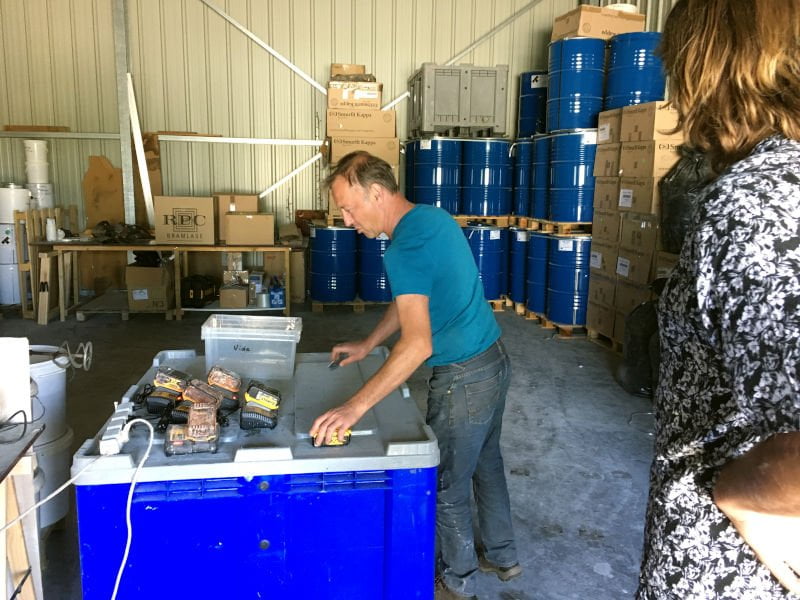
Luc, the project manager, welcomed us to his premises to show us the tools and the fruits of the harvest. We arrived at just the right time to see how the resin is harvested. Luc was very welcoming and took the time to explain everything about the resin and the history of resin tapping, a traditional activity in the Landes de Gascogne region. He then accompanied us to a farm so that we could see the entire process.

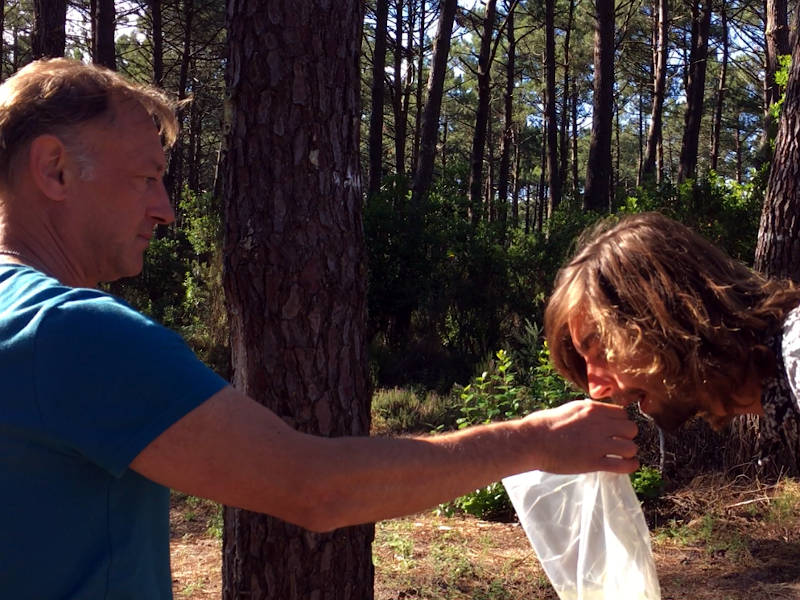
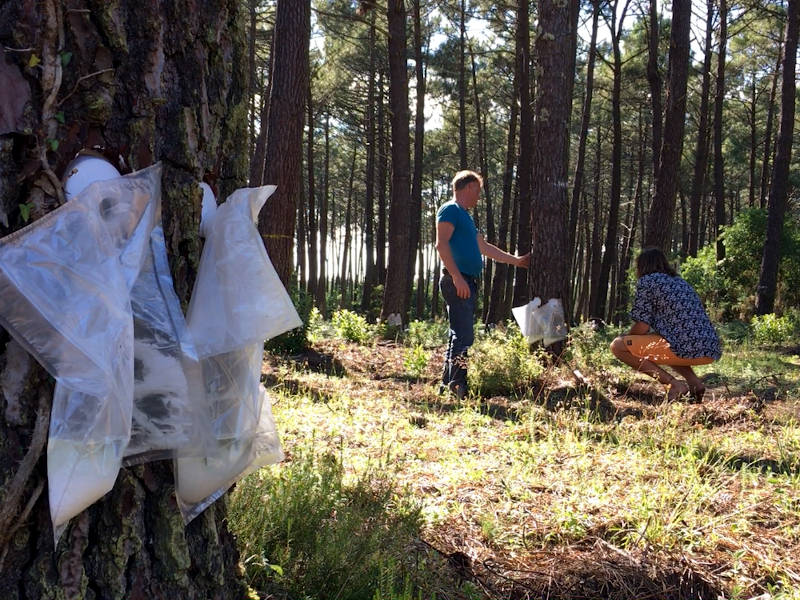

The pine trees are wounded with a cut that respects the tree (called a ‘care’ in the traditional method), onto which a bag is hung. This bag (which will be recycled) collects the sap, the resin secreted by the tree for healing. It is a closed system, so that no impurities are introduced (unlike in the old methods).
Gentle distillation without the addition of chemicals then separates the components to obtain rosin and essential turpentine oil.
I really liked the company that supplies me because it is helping to revive the traditional craft of resin tapping in the Landes region, which had almost disappeared in the 1980s. It does so with strong ethics, methods that respect people and the environment, and a spirit of constant improvement.
Practical use in bee wraps
Rosin comes in solid form and must be ground into powder before it can be mixed with beeswax and other ingredients to coat the cotton fabric. If you want to try your hand at making your own bee wraps with the fabric of your choice, I recommend using my beeswax, rosin and jojoba oil mixing kit. Already prepared in the ideal proportions, all you need to do is melt it to make bee wraps with ease!